Preferred launch
Test the exact project and unit against your stated plan.
For Singapore buyers comparing new launches
Ask which decision still makes sense after the launch weekend. Compare the project, unit, alternatives, cash flow and future exit buyer using one consistent framework.

The comparison most buyers never receive
A useful decision session compares the preferred launch with a real competing option and a resale-or-wait scenario.
Test the exact project and unit against your stated plan.
Check whether the same budget solves the problem better elsewhere.
Make the opportunity cost and fallback plan visible.
Challenge the first assumption
District averages are too broad. Compare the actual unit against relevant resale alternatives, then normalise quantum, layout, floor, facing, age, timing and exit buyer.
District 15 case study
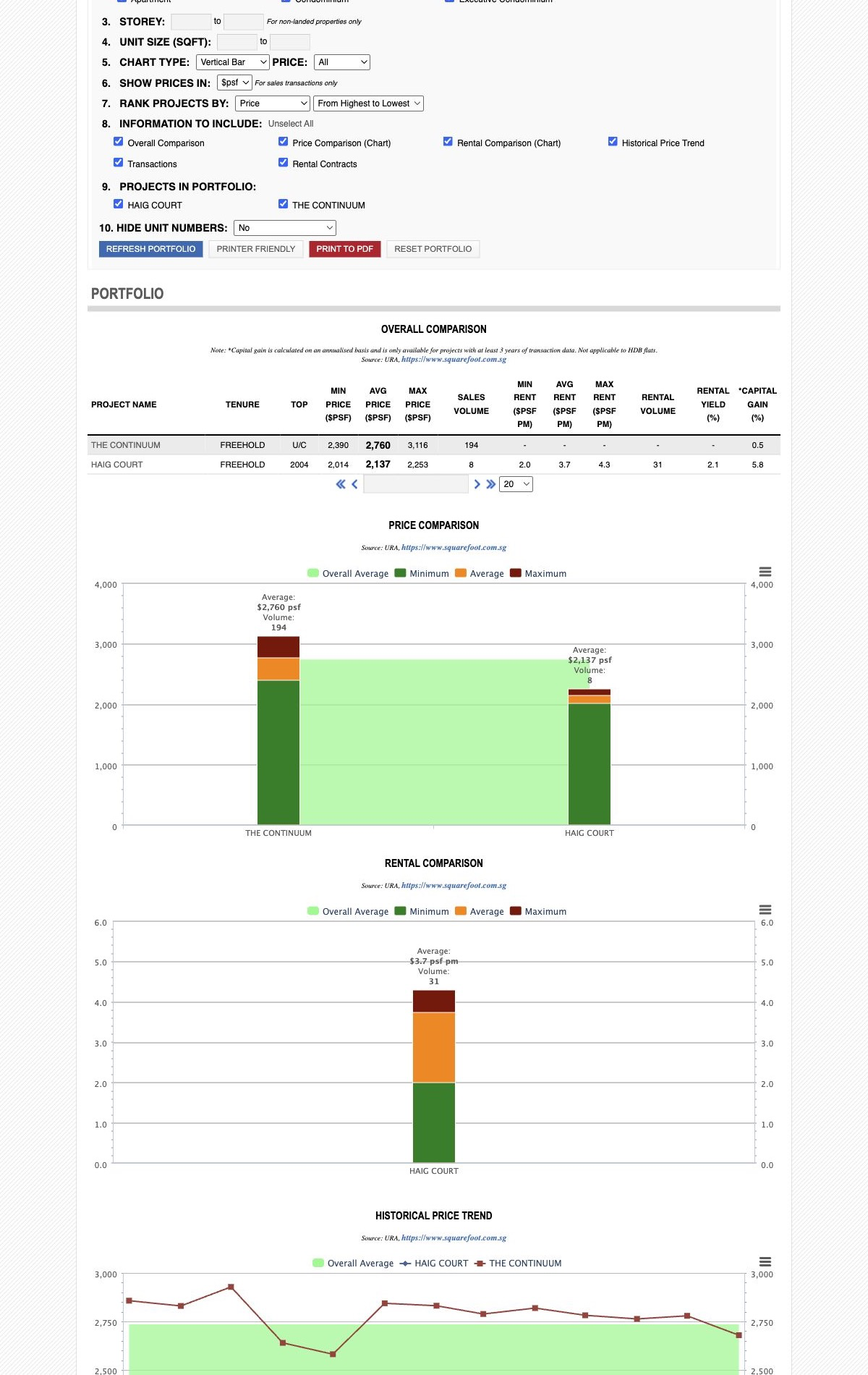
Selected last-12-month Squarefoot view captured 10 Aug 2026; underlying transaction source displayed as URA. Different product age and unit mix mean this is a starting comparison, not a valuation.
Displayed average gap
The captured averages were S$2,760 psf for The Continuum and S$2,137 psf for Haig Court. The decision is whether the newer product, completion timing and exact unit justify the difference for your household and future buyer.
Compare total quantum, usable space, renovation, holding cost, competing supply and a realistic future affordability pool.
Make the premium visible
This is an educational first pass. It does not adjust for unit size, condition, tenure, floor, facing or project quality.
The seven-part underwriting route
Own stay, rental, wealth preservation or a future family move. One property cannot optimise every objective equally.
Preferred launch, credible competing launch, relevant resale and waiting. Compare similar quantum before similar PSF.
Usable layout, floor, facing, tenure, condition, completion timing and the number of competing units.
Stamp duties, financing, construction wait, current housing, renovation and maintenance—not only purchase price.
Future income band, likely competing projects, valuation evidence and why the unit will remain relevant.
Lower sale proceeds, slower transaction, higher monthly commitment and a life-plan change.
Known, assumed, compared, stressed and decided: proceed, prepare or pause.
Questions buyers ask
No. Tricia will compare evidence, unit fit, downside and exit logic. Property returns cannot be guaranteed.
No. Resale can provide more space and immediate use, but may bring renovation, defects and older-project trade-offs.
Bring it. The session starts with your preferred option and tests it against real alternatives rather than dismissing it.
An optional one-page decision memo listing comparison points, assumptions, major risks and the next sensible action.
Ten-factor self-check
Tick only what you can answer with evidence—not what the sales presentation implied.
Optional next step
Request a one-page memo comparing your preferred launch, a competing launch and a resale-or-wait scenario.